SOUTH AFRICA’S AGOA ELIGIBILITY AT RISK: Implications for trade relations, market access and economic competitiveness
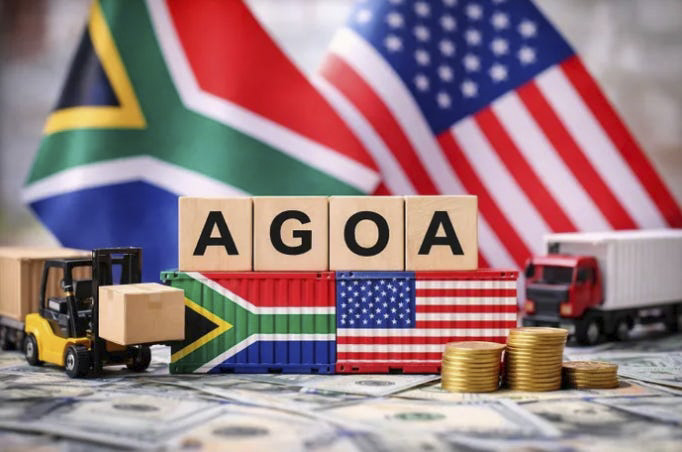
South Africa’s trade relationship with the United States has entered a period of heightened uncertainty following the Trump Administration’s announcement of its intention to terminate South Africa’s participation in the African Growth and Opportunity Act (AGOA), effective 1 January 2027. The announcement, issued on 2 November 2026 by the Office of the United States Trade Representative (USTR), also includes Rwanda. The decision signals a significant development in US – South Africa trade relations, with potential implications for bilateral trade, investment confidence, export competitiveness and the broader economic relationship between the two countries. More importantly, it raises questions about the future of preferential market access for South African products in one of the world’s largest consumer markets. For South Africa, the implications extend beyond the immediate loss of trade preferences. They touch on the country’s broader positioning within international trade negotiations, its ability to attract foreign investment and its competitiveness in an increasingly complex global trading environment. Understanding the US decisionAccording to the statement issued by US Trade Representative Ambassador Jamieson Greer, President Donald Trump notified Congress and the governments of South Africa and Rwanda of his intention to terminate their participation in AGOA following the annual interagency review of eligible sub-Saharan African countries. The US Administration cited concerns relating to South Africa’s trade and investment environment, corruption, and issues considered inconsistent with US national security and foreign policy interests. The announcement reflects the US Administration’s position that continued participation in AGOA is conditional upon countries meeting the programme’s eligibility requirements. These requirements extend beyond conventional trade considerations to include broader governance, economic and diplomatic considerations. It is particularly important to recognise that the US decision is not framed exclusively around tariffs or market access. Rather, it reflects the growing intersection between international trade policy, geopolitical interests, governance and national security. What is at stake for South Africa?AGOA, established in 2000, provides eligible sub-Saharan African countries with preferential, largely duty-free access to the US market for thousands of eligible products. The programme has been an important instrument for promoting African exports, supporting industrial development, encouraging investment and strengthening commercial relations between the United States and African economies. South Africa has historically been among the more diversified and significant beneficiaries of the programme, particularly in manufacturing and value-added exports. Its utilisation of AGOA has supported export opportunities across several sectors, including automotive products, agricultural commodities, processed food, chemicals and other manufactured goods. South Africa’s proposed exclusion from AGOA should not be viewed solely as an export market access challenge. It is also a strategic reminder that the competitiveness of the animal feed industry depends on a broader enabling trade environment, including access to competitively priced raw materials, investment in domestic processing capacity, efficient logistics and access to growing regional and international markets. For AFMA and its members, the opportunity lies in strengthening South Africa’s position as a competitive animal nutrition and feed manufacturing hub for Africa, while maintaining constructive engagement with established international trading partners. The proposed termination therefore presents several potential challenges. 1. Increased export costs and reduced competitivenessThe most immediate concern is the potential loss of preferential tariff treatment for eligible South African exports entering the US market. Depending on the applicable tariff classifications and any alternative trade arrangements, exporters could face higher import duties, increasing the landed cost of South African products.This could weaken their competitiveness against suppliers from countries that continue to benefit from preferential access or operate under more favourable trade arrangements. For export-oriented industries, particularly those operating on relatively narrow margins, even moderate increases in import costs could influence purchasing decisions, sourcing arrangements and long-term commercial relationships. 2. Implications for investment and industrial developmentAGOA has also served as an investment incentive by providing businesses with greater certainty regarding access to the US market. The possibility of losing this preferential access could influence investment decisions, particularly where production facilities and supply chains have been established around exports to the United States. Investors generally consider not only production costs and market demand but also the predictability of trade policy. Consequently, uncertainty surrounding South Africa’s AGOA eligibility could affect future investment in export-oriented manufacturing and agro-processing. 3. Agricultural and agro-processing trade exposureThe agricultural sector is another important consideration. Preferential access to international markets supports the diversification of export destinations, improves returns to producers and creates opportunities for value addition across agricultural value chains. South African agricultural exporters operate in an increasingly competitive environment characterised by changing tariff regimes, sanitary and phytosanitary requirements, sustainability standards and evolving geopolitical relationships. Any deterioration in preferential access to the US market could place additional pressure on affected exporters, particularly those with established commercial relationships and supply chains directed towards the American market. However, the actual impact will depend on the products concerned, their tariff treatment under the US tariff schedule, the extent to which exporters currently utilise AGOA preferences and the availability of alternative markets. A wake-up call for trade competitiveness and diversificationThe proposed termination of South Africa’s AGOA eligibility represents more than a potential change in tariff treatment. It is a reminder that preferential market access is increasingly intertwined with geopolitical relationships, economic diplomacy and broader national interests. For South Africa, the immediate priority should be to establish clarity on the proposed measures, assess the potential economic exposure and pursue constructive engagement with the United States. Equally important is the need to strengthen domestic competitiveness, diversify export markets and deepen regional and continental trade integration. Ultimately, South Africa’s long-term export competitiveness cannot depend exclusively on preferential access to individual markets. It must be supported by productive capacity, competitive input costs, efficient logistics, regulatory certainty, value addition and the ability of businesses to respond to changing international market conditions. The AGOA development should therefore serve as a strategic opportunity for South Africa to reassess its trade relationships, strengthen its economic diplomacy and accelerate the development of a more diversified, resilient and competitive export economy. .
SASAS Free State Branch Student Day

On 9 October 2026, AFMA participated in the SASAS Free State Industry Day at the University of the Free State (UFS), where AFMA Technical Intern, Cilé-Mari Bredenkamp, delivered a presentation titled “First Steps into the Animal Feed Industry.” Drawing from her own journey as an Animal Science graduate, current MScAgric Animal Nutrition student and AFMA Technical Intern, Cilé-Mari shared insights into the transition from university to industry and the diverse career opportunities available across the animal feed value chain. Additionally, Cilé-Mari encouraged students to approach their careers with enthusiasm, confidence and a willingness to learn, emphasising the importance of participation and embracing new opportunities. The presentation concluded with a meaningful message:“You don’t need to know the whole path. Just take the next step.” AFMA remains committed to supporting the next generation of animal feed industry professionals. We wish all UFS students every success in their studies and future careers as they take their first steps into the industry. .
NEW AFMA BOARD AND STRATEGIC FOCUS FOR 2026/2027
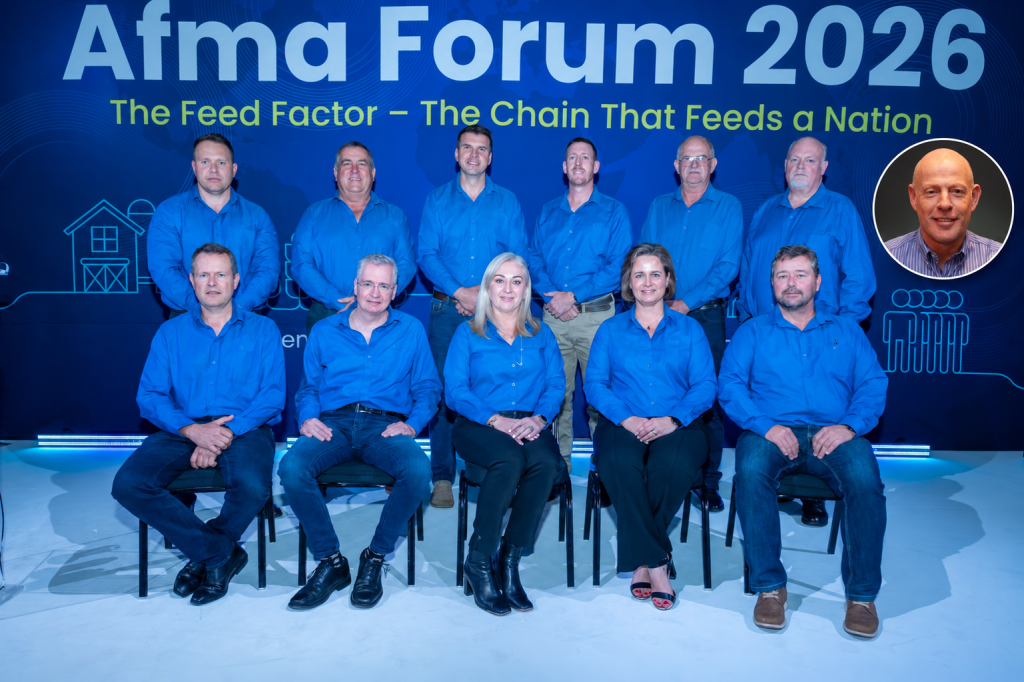
MEDIA RELEASE NEW AFMA BOARD AND STRATEGIC FOCUS FOR 2026/2027 – 1 October 2026 Pretoria – The Animal Feed Manufacturers Association (AFMA) has announced its Board of Directors for the2026/27 term, with Anina Hunter elected as Chairperson and Thinus van Lill as Vice-Chairperson. The new termcoincides with a clear strategic focus for AFMA, centred on creating collective industry value and strengtheningthe operating environment for its members. Hunter and Van Lill bring more than 20 years of combined experience on the AFMA Board, providing continuity, institutional knowledge and a strong understanding of AFMA and the broader animal feed industry. AFMA Board of Directors 2026/27The AFMA Board of Directors for the 2026/27 term comprises: Mrs Anina Hunter – Epol (Chairperson)Mr Thinus van Lill – Nova Feeds (Vice-Chairperson)Mr Brett Roosendaal – Epol Dr Josef van Wyngaard – Voermol FeedsMr Bertus Kirstein – Nutri Feeds Mr Martin Oosthuizen – De Heus Mr Paul Saunders – Sovereign FoodsMr Dieter Fleischmann – Afgri Animal Feeds Mr Ruan Stander – Meadow FeedsMr Hugo Buys – Meadow FeedsMr Francois du Toit – Nova Feeds AFMA welcomes Hugo Buys and Bertus Kirstein to the Board for the 2026/27 term. The Association also extends its sincere appreciation to outgoing Directors Michael Schmitz of Meadow Feeds and Dr Francois Crots of Country Birds Holdings for their contribution and service to AFMA and the industry during their term on the Board. The Board will provide strategic oversight as AFMA translates its 2026/27 strategic focus into action, followingits presentation at AFMA’s Annual General Meeting at Sun City on 8 September 2026. At the heart of thisdirection is a clear emphasis on purpose and member value: measuring AFMA’s effectiveness not simply byactivities undertaken, but by whether collective industry action creates a better operating environment for itsmembers. AFMA Chairperson Anina Hunter said: “AFMA’s strength lies in bringing the industry together around issueswhere collective action can make a meaningful difference. Our focus is to represent our members with a credible voice, help shape a more enabling operating environment, and work constructively with government, regulators and value-chain partners on the issues shaping our industry’s future.” Creating collective industry valueAFMA’s strategic focus is built around five interconnected roles: to influence the policy and regulatoryenvironment, represent the formal feed industry with a credible collective voice, assure the credibility of theindustry, align the value chain around common challenges and lead where collective action can make a difference. For AFMA members, this direction is intended to translate into better regulation and stronger policy outcomes, a credible collective industry voice, greater recognition and trust in the formal feed industry, stronger and more resilient value chains, and better insight and preparedness for what lies ahead. Ultimately, member value will remain the measure of AFMA’s strategy. Key areas of focus for 2026/27 include modernizing the feed regulatory framework and industry assurance environment, improving industry intelligence and digital capability, supporting innovation and building the skills and technical capacity needed for the industry’s future. The strategy also recognises that animal feed does not operate in isolation. A competitive feed industry is closely connected to competitive grain and oilseed sectors, functioning trade and logistics, healthy livestock industries, animal health, research and skills, and an enabling regulatory environment. Strengthening collaboration across these areas is therefore central to building a more competitive and resilient feed-to-food value chain. With its Board and leadership in place for 2026/27, AFMA will focus its collective capacity where industry collaboration can create the greatest value for members, while advancing its longer-term strategic direction towards a competitive, credible and resilient animal feed industry that contributes to South Africa’s food security. About AFMAAFMA is the official representative body of the formal animal feed manufacturing industry in South Africa, representing approximately 59% of national feed production. The Association plays a central role in feed safety, regulatory engagement, training, and industry collaboration in support of food security and sustainable animal production. Media enquiries: Petru Fourie, Operations Manager, AFMA | petru@afma.co.za .
AFMA advances feed integrity through science, data and industry collaboration
AFMA participated in Anton Paar Southern Africa’s workshop, “Advancing Feed Quality, Nutrition & Performance: Elevate Feed & Pet Food Quality with Advanced Analytics,” held in Midrand on 19 August 2026. The workshop explored how advanced analytical technologies can support feed and pet food quality, strengthen process control and improve product performance. Driving safe feed for safe food AFMA was represented by Bonita Cilliers, Technical & Regulatory Advisor, who presented “AFMA: Driving Safe Feed for Safe Food – Building Feed Integrity through Science, Data and Industry Collaboration.” During her presentation, Bonita highlighted AFMA’s role in connecting the animal feed industry with scientific and regulatory work. She explained how reliable testing and long-term data can strengthen feed safety, support regulatory compliance and provide valuable intelligence to the industry. AFMA’s monitoring programmes for Salmonella, mycotoxins, dioxins and PCBs were shared as practical examples of how collective industry data can be transformed into meaningful insights. These programmes support AFMA’s continued commitment to building feed integrity and promoting safe feed for safe food. From scientific insight to practical application The programme also included a presentation by Zenani Shozi from Bragan Ingredients, who shared insights into pet food quality and testing. Dr Banu Sezer, Global Market Development Manager at Anton Paar, delivered an in-depth session on feed quality, nutrition and performance. The afternoon programme moved from theory to practice through two laboratory sessions, allowing participants to engage directly with analytical instrumentation and explore its potential applications within the feed and pet food industries. The workshop provided a valuable platform for knowledge-sharing, practical learning and industry collaboration. It also reinforced the important role that science, accurate testing and dependable data play in advancing feed quality and protecting the wider food value chain. AFMA thanks Anton Paar Southern Africa for hosting an informative and engaging workshop and for creating an opportunity to connect scientific knowledge with practical industry applications. . FacebookTwitterLinkedInWhatsAppEmailPrint
AFMA Media and Industry Day 2026

AFMA CALLS FOR MODERN INDUSTRY ASSURANCE TO STRENGTHEN FEED SAFETY, REGULATORY EFFICIENCY AND FOOD SECURITY – 28 May 2026 The Animal Feed Manufacturers Association (AFMA) hosted its Media & Industry Day in Pretoria, bringing together media representatives, industry stakeholders and AFMA members to engage on the evolving role of industry assurance, feed safety, and sustainability within South Africa’s agricultural value chain.Feed regulation and industry assurance are increasingly interconnectedOpening the session, AFMA Executive Director, Liesl Breytenbach, highlighted the increasingly integrated nature of feed and food systems and the critical role of the formal feed industry in supporting food security, animal health, and consumer confidence. “Long gone are the days that the feed chain is separate from the food chain – these chains are becoming increasingly interconnected,” Breytenbach said. She noted that the formal animal feed industry operates within one of the most prescriptive agricultural regulatory environments under the Fertilizers, Farm Feeds, Agricultural Remedies and Stock Remedies Act (Act 36 of 1947), where feed ingredients, additives, formulations, manufacturing practices, and traceability systems are extensively regulated before products enter the market. “In contrast, significant parts of the retail food sector rely more heavily on food safety standards, post-market enforcement, consumer protection legislation, and common law liability once products are already in circulation,” she said. According to Breytenbach, this is why modern industry assurance systems are becoming increasingly important – not to replace government regulation, but to strengthen traceability, accountability, audit consistency, and consumer confidence across integrated feed and food value chains. AFMA further confirmed that it is currently reviewing and strengthening its existing Code of Conduct framework to support a more practical, risk-based, and technology-enabled audit and compliance environment, including improved traceability, electronic audit systems, and enhanced reporting capability. Efficient assurance systems can support innovation and food securityPresenting on modern assurance systems and industry collaboration, Director CPG, Thea Laufs, highlighted the growing shift toward integrated, risk-based, and technology-enabled approaches to compliance and assurance across agricultural sectors. According to Laufs, efficient assurance systems can also support regulatory effectiveness and market responsiveness within highly regulated sectors such as animal feed. “Overly delayed pre-market approval systems can become counterproductive to innovation, competitiveness, supply continuity, and ultimately food security. Strong industry assurance frameworks provide an opportunity to support regulatory efficiency without compromising feed safety, transparency, or accountability,” she said. Industry collaboration and future capability remain criticalProviding a practical example of industry-led assurance in practice, General Manager of SAPPO, Karla Zietsman, shared insights into Pork 360, the South African pork industry’s assurance and certification programme. She highlighted the importance of collaboration, traceability, auditing, and continuous improvement in strengthening accountability and confidence across the pork value chain. AFMA noted that sustainable assurance systems ultimately depend not only on standards and frameworks, but also on skilled people, implementation capability, and future industry leadership. The Association reaffirmed its commitment to ongoing industry training, skills development, and collaborative engagement to support a feed sector that is safe, smart, and sustainable. About AFMAAFMA is the official representative body of the formal animal feed manufacturing industry in South Africa, representing approximately 58% of national feed production. The Association plays a central role in feed safety, regulatory engagement, training, and industry collaboration in support of food security and sustainable animal production. . FacebookTwitterLinkedInWhatsAppEmailPrint